
Illustration & image resources for your science
Looking to make some eye-catching icons and illustrations for your conference presentation or poster? You definitely don’t have to draw everything from scratch! There are many online resources for you to get vector illustrations and icons, as well as raster images and photographs. The best part is, most of these are completely free! You just need to follow the licence under which these graphics and images are published under (e.g. credit the original scientific illustrator or artist)! For more information on copyright licences, check out our recent blog post! Let’s go through some of our personal favourite resources for academics.
Organism silhouettes with PhyloPic
Looking for silhouettes of animals, plants or other organisms? PhyloPic was created by Michael Keesey and has a wide range of extinct and extant organism silhouettes published under the Creative Commons licence. That means that you can use them for free, but you need to credit the creator (see individual silhouettes for more details). You can download silhouettes in various formats like .PNG and .SVG making them easy to add and edit into your own research figures, graphical abstracts, conference slides and posters. You can even add PhyloPic silhouettes directly into your R plots with the rphylopic package.
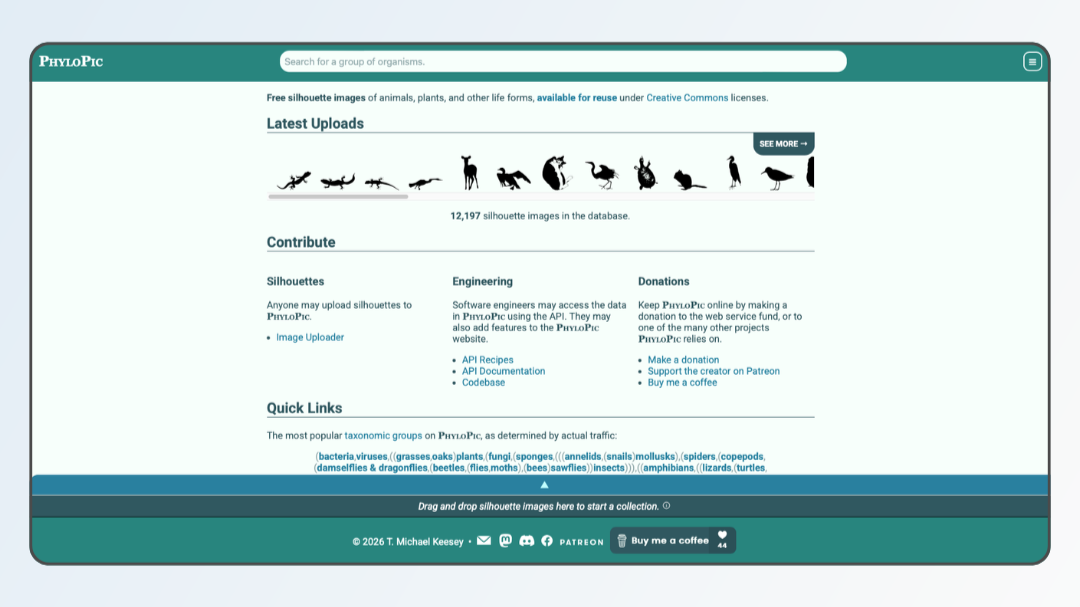
Organism silhouettes with PhyloPic.
Custom maps with MapChart
MapChart is a free-to-use map generator, developed by Minas Giannekas. You can make custom maps, add map legends, colour code regions etc. and then download those maps in various formats like .SVG that you can further customize in vector-based software like Affinity Studio and Inkscape. If you need to add a map in your publication figures, this is a great resource! All maps made in MapChart are published under the CC-BY-SA licence meaning that you use them for free but you have to credit the creator.
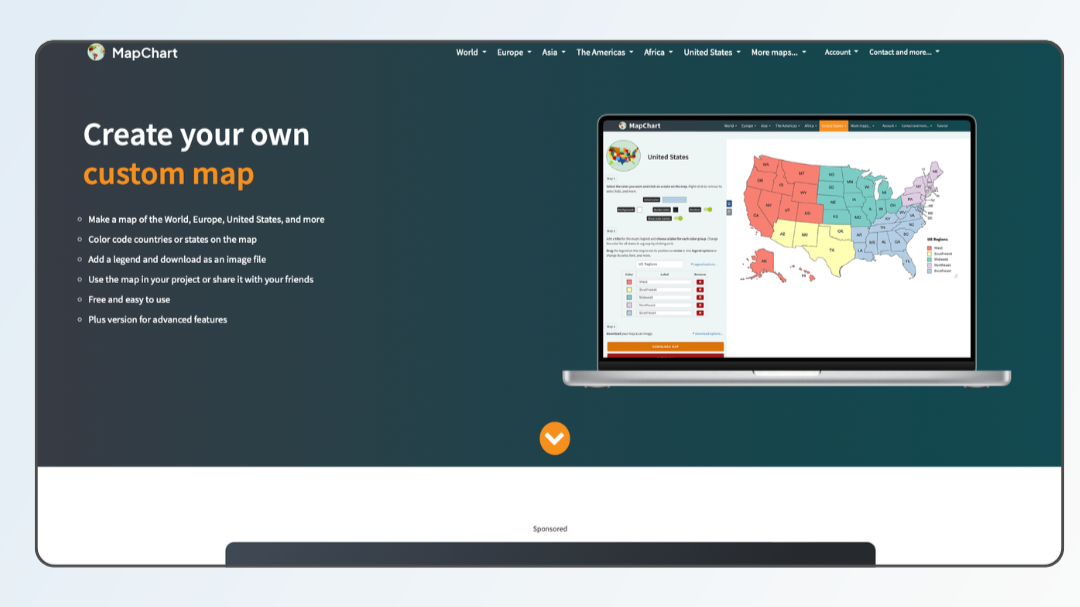
Custom maps with MapChart.
Pixabay and Pexels
If you’re looking for professional photographs to add to your conference slides, or some illustrations and icons to make your poster or graphical abstract more engaging: Pixabay offers stock images, vector illustrations, videos and even music/sounds from different artists for free! Similarly, Pexels offers stock images and videos for free. You can use and edit their content even without giving credit to the original artist (although doing so is much appreciated).
In Pixabay, you can even filter your search to only show authentic content (and not AI-generated content).
Icons from the Noun Project
The Noun Project is one of the most comprehensive collections of icons online. You can find icons of different styles and of a surprisingly vast array of topics and you can download them in various formats like .SVG or .PNG with transparent background. This makes it easy to add icons and edit them to fit your presentation slides, conference posters etc.
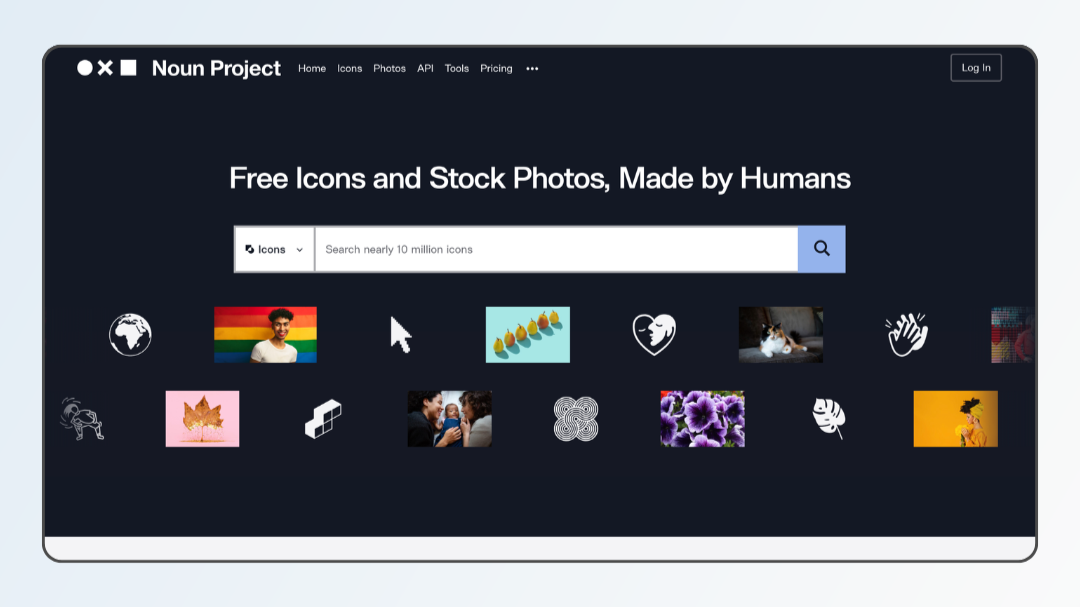
Icons from the Noun Project.
PowerPoint and Keynote
If you have a paid subscription in Microsoft 365, then you have the right to use PowerPoint’s library of stock images, icons and illustrations! You can browse and add these natively from PowerPoint by going to Insert > Image or Icon or Illustration. Keynote has a similar library of icons, which you can freely use in your Keynote presentations (but not outside Keynote).
What about using or making graphics made by generative AI?
We urge you to be hesitant towards AI generated graphics for many reasons. For one, AI generated scientific figures are usually full of scientific errors and can easily spread misinformation. Secondly, they do not consider accessibility standards as default.
Thirdly, the creation of generative AI images has a huge environmental impact to the planet. This article shows how much water and energy is used by ChatGPT, and note that generating images with AI is much more energy intensive than generating text (MIT Technology Review, Forbes).
Finally, most generative AI platforms do not ask consent, credit or compensate the original creators of the images they use to train their AI, while they themselves profit from people using their generative AI platforms. This is not an ethical use of art (or content in general) so we strongly suggest avoiding the use of AI generated images. Instead we suggest using graphics from the many free resources we mentioned in this blog post, directly made from creators, and using them according to their licence. For more information on this, check out our licensing blog post!