Using images & illustrations from the web responsibly
In the year of 2026, we are very lucky to have almost unlimited access to images, illustrations and icons via the world wide web. However, getting access to those science illustrations or images online doesn’t necessarily mean that you can use or edit them freely. It's very important to know how we are actually allowed to use these.
Copyright licences
Scientific illustrations, images, and icons online are published under a copyright licence chosen by their creator. This licence explains exactly how someone can use a certain scientific illustration or image (see more here). Things that are usually mentioned are:
Whether you need to acknowledge the scientific illustrator
Whether you are allowed to edit the original scientific illustration or image
Whether you are allowed to use it for profit (e.g. on merch that you plan to sell)
Different websites might have different licences for scientific images, illustrations and icons. One of the most common licences online is the Creative Commons licence (or CC). You can usually find information about the licence of scientific images, illustrations and icons when you go to their source website.
For example, this capybara image taken by Clodomiro Esteves Junior is published online under the CC BY-SA 4.0 licence. Anyone can use and edit this image, but they need to credit the photographer.
.jpg)
Image of a capybara taken by Clodomiro Esteves Junior, published online under the CC BY-SA 4.0 Licence.
A second example is organism silhouettes published in PhyloPic, like this capybara silhouette by Skye McDavid. This silhouette is published under the CC0 1.0 Licence. This means that anyone can use and edit this silhouette in any way they want (even for commercial purposes) without needing to cite the creator or ask permission.
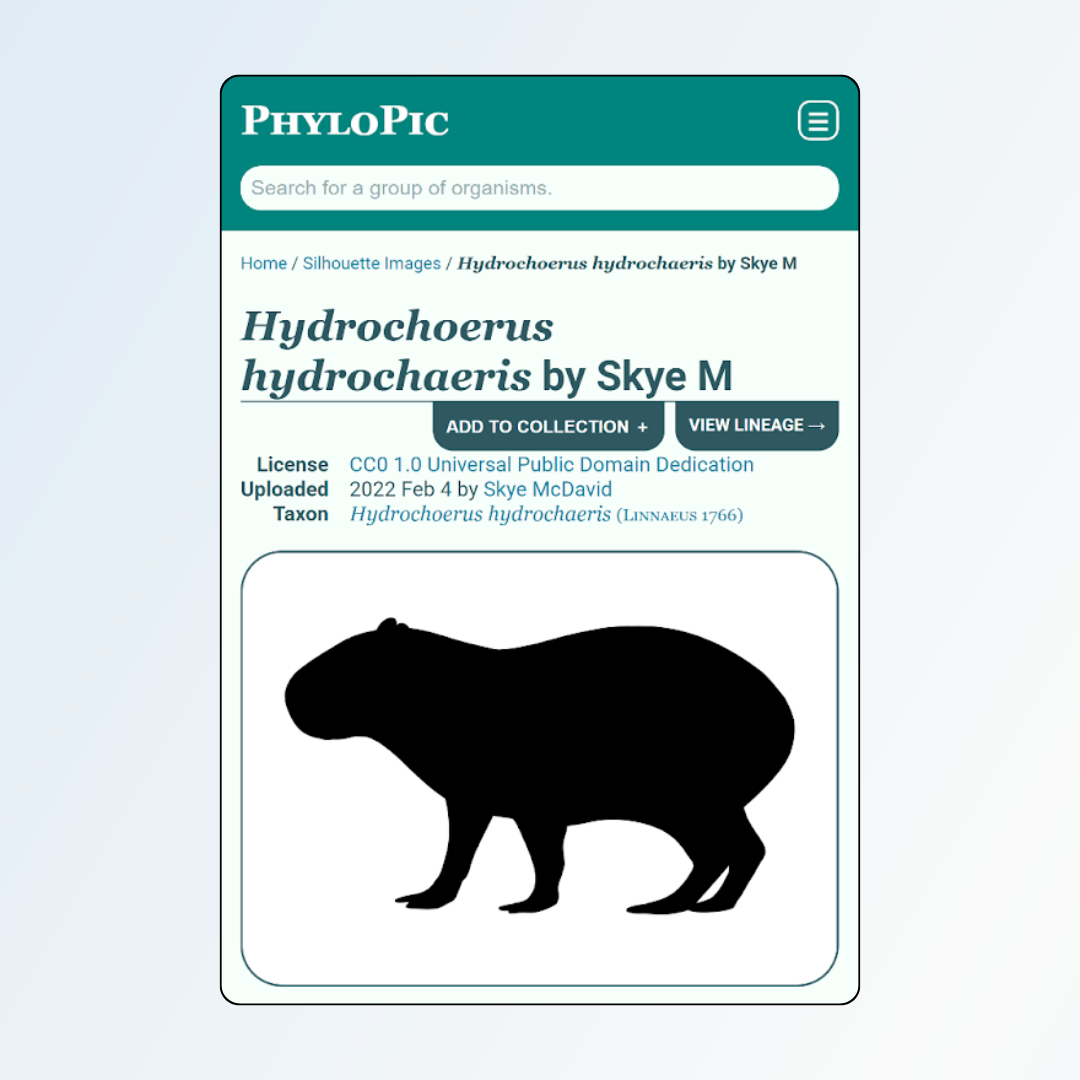
Silhouette of a capybara by Skye McDavid, published under the CC0 1.0 Licence. Silhouette found on PhyloPic.
On the other hand, illustrations and images from iStock, like this capybara illustration by Alena Popkova cannot be used legally without either paying a one-off fee or having an active subscription to iStock.
Tip 1
When searching on Google, you can filter to get images published under the Creative Commons licence! You can do this by going to Tools and changing the default (not filtering by licence) to filter by creative commons licence. Don’t forget to always make sure to visit the scientific illustrator’s original website to check the exact details of the licence!
Tip 2
Not sure if/how you are allowed to use a graphic by a scientific illustrator? Ask them! Oftentimes, artists will be more than happy to explain how you can use their images, or even give you the image in better quality or without a watermark!
What about scientific illustrations and images made by generative AI?
Generative AI is getting more and more popular nowadays. While it can feel like a powerful tool for anyone to generate “custom” illustrations, figures, and images for science, we should consider some big underlying issues regarding artist consent and credit.
Generative AI is trained by using images and illustrations made by various scientific illustrators and artists. In the grand majority, these artists have never consented to their images being used in that way, and opting out is very complicated or not possible. In addition, generative AI does not credit the original artists or compensate them in any way. These issues get even worse when most generative AI platforms are privately owned and make profit themselves.
While there is a possibility for generative AI to be ethical (e.g. by asking permission from the original artists, crediting and compensating them accordingly), this is not the case so far. Because of these concerns, many big journals for example don’t accept any images generated by AI in scientific journal covers, or publication figures.
For the time being, we strongly suggest using graphics directly from creators, and using them according to their licence.
There are many free resources online where you can ethically access illustrations, nature photographs, and various icons for your scientific presentations, conference posters, graphical abstracts and more.
Stay tuned for our next blog post on those illustration, image and icon resources!